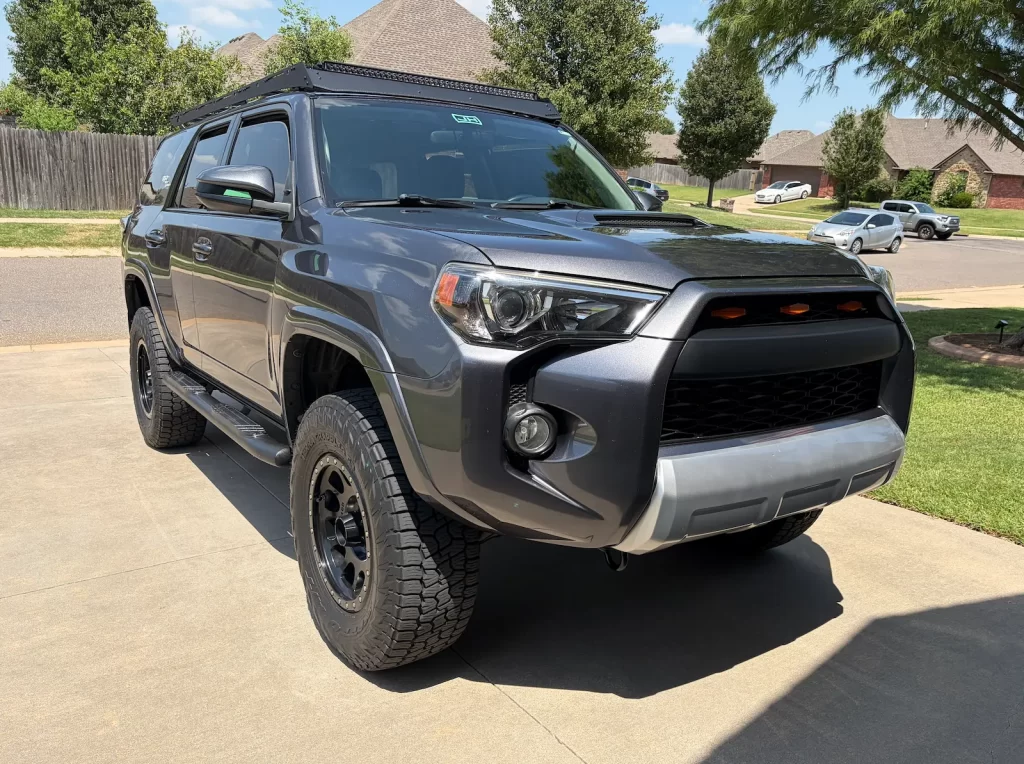
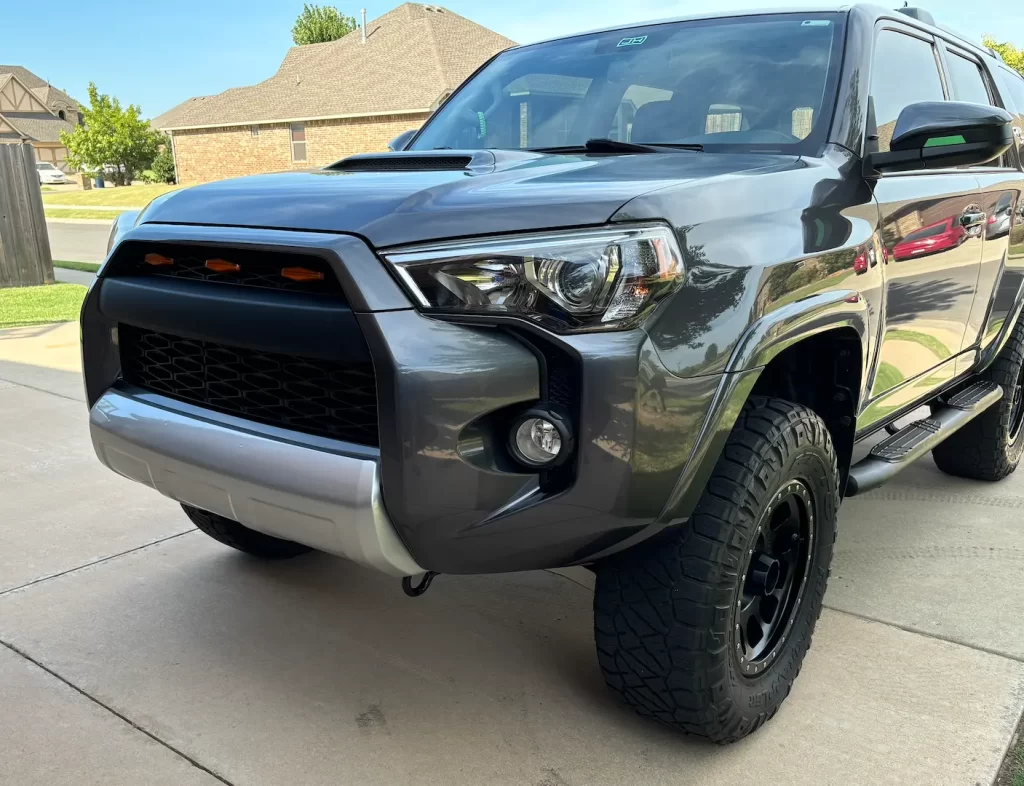
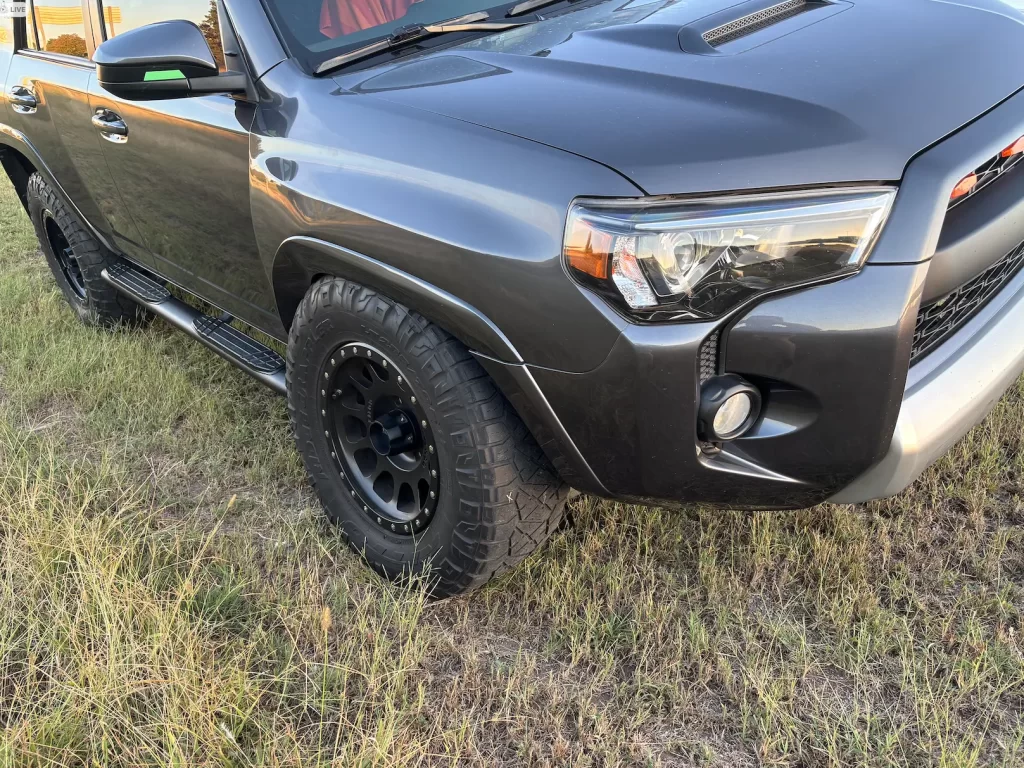
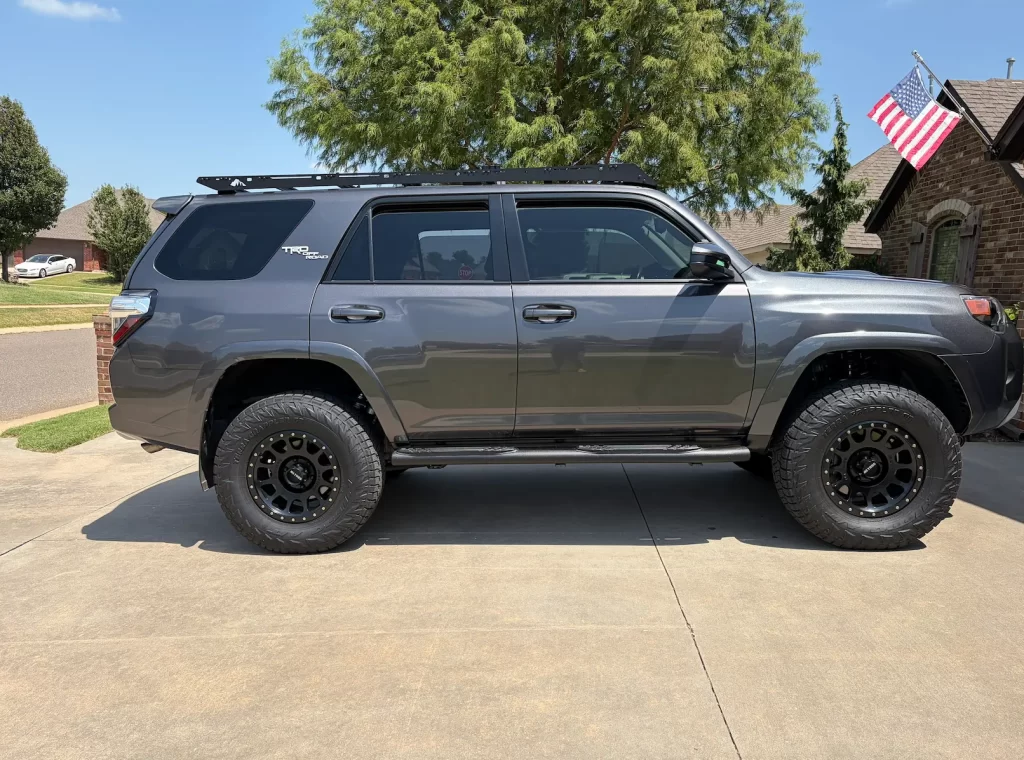
This is my DIY crazy tale of going from a rough riding 2017 5th Gen 4Runner, TRD OffRoad to a smooth sailing 4x4.
The First Lift:
When I decided to do wheels, tires and a lift, I admit i did not research this enough. I was chasing looks. I went with a DBS spacer lift that also included rear springs and shocks. I also went with 285 / 70/ 17 Nitto Ridge Grappler tires. This is where the trouble started, but I didn’t realize the long-term ramifications of my choices. The 4Runner rode rough from day one after this. The overall ride was very stiff. This was good for cornering and braking, or so I thought, but terrible for everything else. The BDS lift was 3″ in the front and 2″ in the rear.
Not Good Vibrations
I started doing a lot of traveling over the next 2 years. More and more I noticed how rough the vehicle was on the road.. I would get frequent alignments, tire rotations, tire balances, etc but nothing seemed to help. Not only did I have vibrations, I also had steering wheel shake, and my brakes with pulsate especially coming to a full stop.
Fed Up and Motivated
During the pandemic I started doing some of my own maintenance. Fluid changes, etc. This motivated me to take on more DIY stuff. Eventually I did all the fluids, grease, and major maintenance. I final was fed up with the ride enough that I was determined to do a ton of research, and spend what was necessary to fix my issues. I immediately turned to YouTube and the Car Care Nut channel as well as 4Runner Garage, and Viking Garage channels for insight and instruction.
Replacing Tires was Huge
After doing a ton of research I decided on Nitto Terra Grappler G3 tires. These tires still looked really cool, and overall was suited better for all the highway miles I was driving. Once I changed the tires, and had a proper road-force balance, this is where things got interesting. No the car was much smoother, but I could notice vibrations even clearer. The first one I noticed was needle bearing rhythmic vibration issue. So that was next on the list.
Needle Bearing & CV Axles
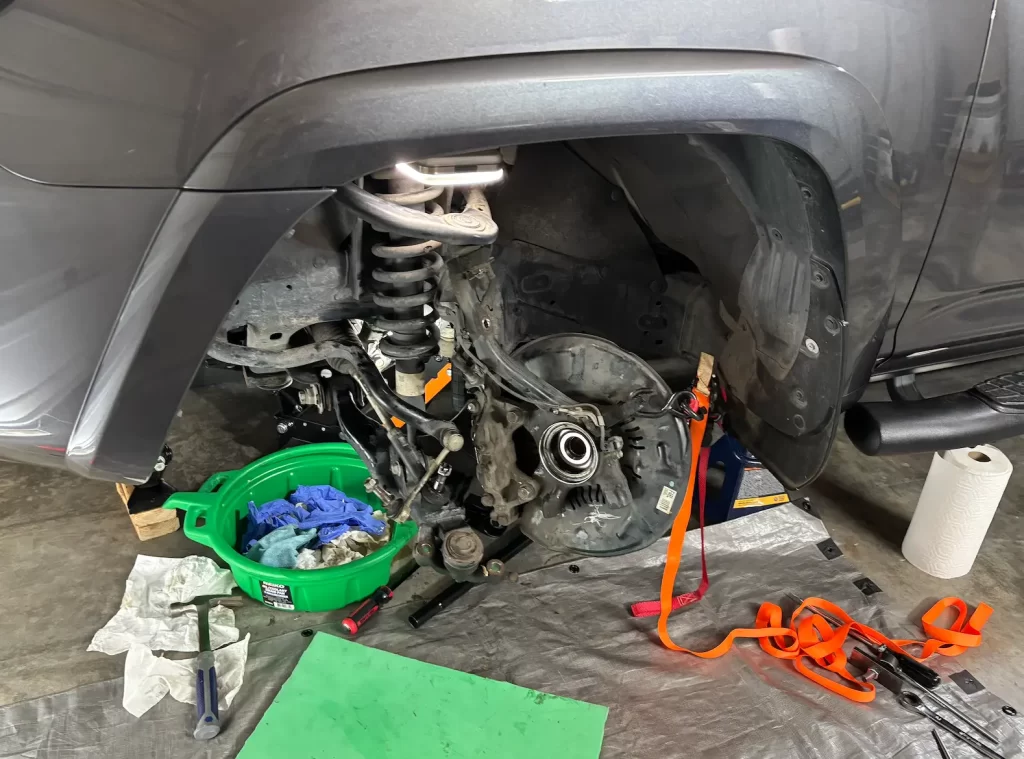
I was prepping for the needle bearing job. This would be by far my most involved DIY project ever. My good friend Ed Rucker at Eddie’s Imports suggested I go ahead and do the CV axle at that time. I checked them, and sure enough they both had boots leaking. So installed the bushing, and both CV axles. Things got a little smoother, and yet I still had this strange fluttering, somewhat random fluttering viibration.
A Highway Mishap
I had taken a trip about an hour from home, and on my way back I started getting this violent vibration. I pulled off the highway and as soon as I stopped, the passenger side of the front dropped down with a loud “boom” like I stopped in a hole. Come to find out, someone had tried to steal my wheels!!!
I had to have the truck towed to a shop. All the lugs had broken off of the passenger side front hub. I stopped just in time and my 4Runner was resting on the tire so it did not fly down the highway. Luckily nobody was hurt.
The shop that fixed my lugs did not use OEM. They also said my rotor was not damaged. That is foreshadowing for later. Once the car was drivable, I switch my focus to bodywork for the time being.
End of Adjustment & End of the Spacer
I went to get a routine alignment and the tech said, “Hey this is all the way to the end of the adjustment. It’s close but not where I want it to be.” That was more motivation. I decided that day that I was replacing this lift once and for all.
The new lift was heavily researched, and I even got second and third opinions from a national and local source. I decided to buy all the parts from ShockSurplus.com, then have them installed by a very reputable company locally.
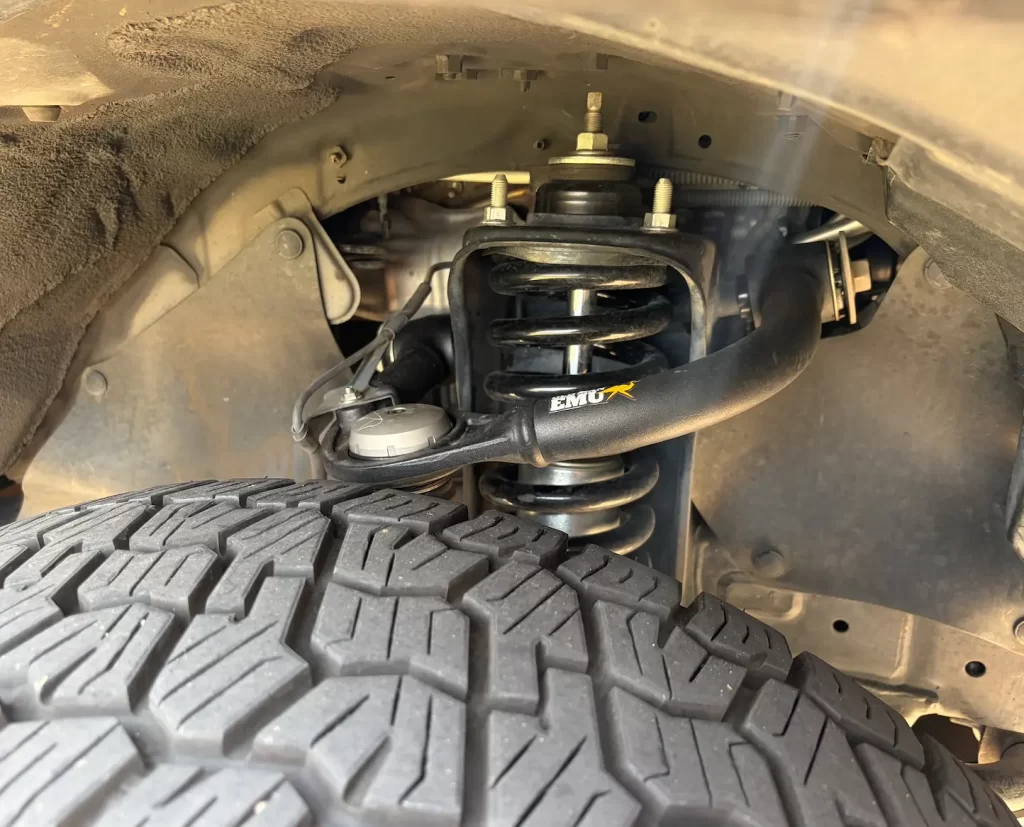
The lift was going to be slightly lower than the first one by about 1/2″ in height. This new lift was 2.6″ in the front and 1.5″ in the rear. I decided on Biltstein 6112 coil overs in the front with Old Man Emu upper control arms. In the rear are Biltstein 5160s with remote reservoirs and a new set of springs. The end results were amazing difference. The 4Runner felt smooth and planted. It did not bounce and stopping was reliable and steady.
Steering Shake & Wheel Lugs
Now with everything so much smoother, I started to notice some minor vibrations and some steering shake at 55mph. So my hunt to correct these continued.
The steering shake felt like it was coming from the front tires. They were road-force balanced, so it had to be something else. The shop that installed the lift, said “Hey we noticed one set of lug nuts on the front were different than the rest, so we divided them up among the 2 front wheels. Hmm… why would that be? Well remember the highway mishap? It resulted in a new wheel, new lug nuts and new lugs in the OEM hub.
I immediately purchased new lug nuts for every wheel. Then I installed them on each wheel, slowly, turning the wheel as I went. Then I torqued each one to 50lbs, then 70lbs. Then I left the 4Runner down on the ground, finished them at 83lbs of torque. The steering shake was gone.
Random Flutter Vibration
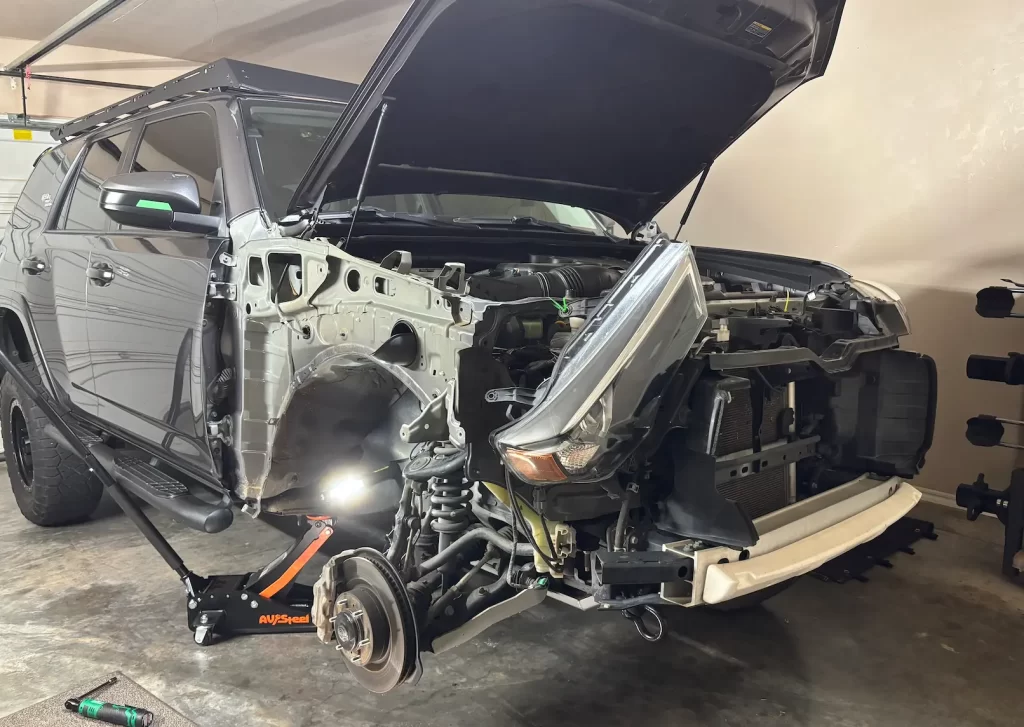
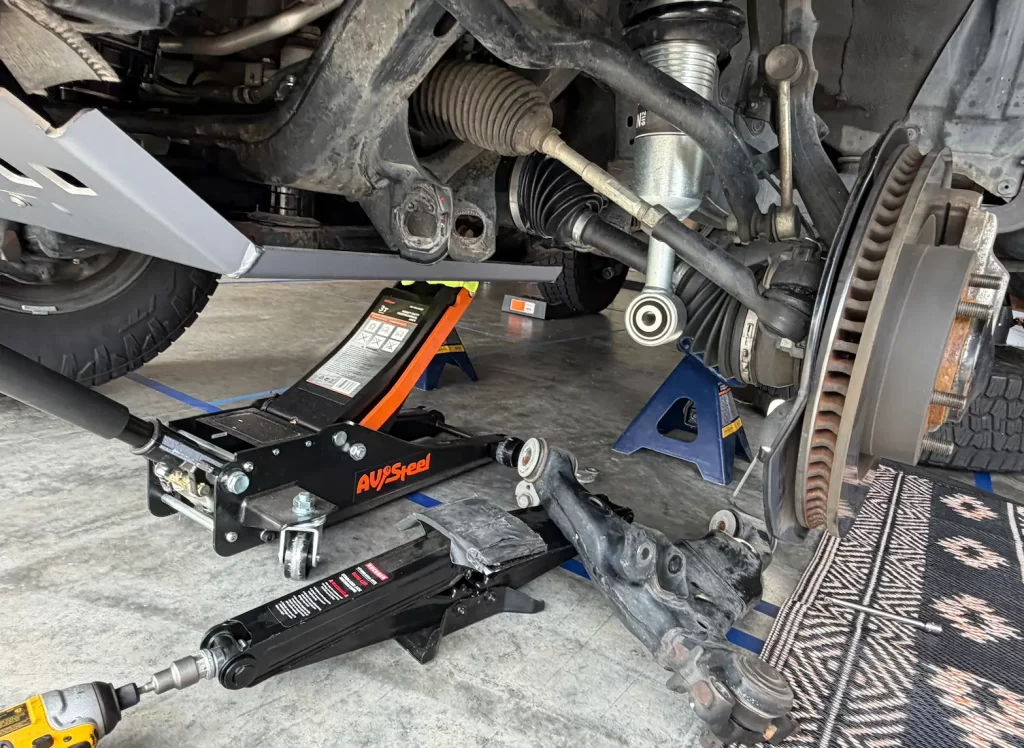
After all that, the 4Runner was driving so much smoother than it every had. I would still get this fluttering vibration when hitting bumps or at high speed. It was somewhat random but it was there. Then I happened on 4Runner Garage and his lower control arm bushing video. At this point I was all in. That’s right, I saved up and bought not only OEM lower control arms but also OEM hubs. The reason I was suspicious of the hubs was the non-OEM lugs on one side. It would be very difficult to tell if the hub had an issue from that. I also figure may as well do front brakes and rotors. I installed them all at once. Then immediately got the vehicle aligned. The difference at this point has huge.
My Thoughts on Why the Spacer was a Bad Idea
I think the spacer puts the stock springs and shocks under a lot of pressure. This transfers force to bushings, bearings, ball joints, etc. It also puts the upper control arms at a difficult angle and tire wear becomes part of the issue.
Today & What's Left to Chase?
Is the 4Runner perfect? No. I do not expect it to drive like a Lexus, or even like a stock 4Runner. What fun would that be? I have learned so much doing all this myself or collaborating with knowledgable people.
What am I chasing down now is a weird rubbing or friction feeling when braking, felt through the brake pedal. It’s noticeable at the end of a stop. If I had to guess, it’s in the front, but I am not entirely sure.